
What humans have -- that no machine can mimic -- is the ability to foster positive and authentic relationships with coworkers, managers and clients, says Job Van Der Voort, CEO and co-founder of Remote.

Vaniya Agarwal says Friday April 11 will be her last day at Microsoft

rediffGURU T S Khurana answers readers' personal income tax queries.

US Vice President JD Vance called on India to drop non-tariff barriers, give greater access to its markets and buy more American energy products and military hardware. Vance, in a speech in Jaipur, highlighted the need for a stronger US-India partnership for a prosperous and peaceful 21st century. He emphasized the importance of working together to address global challenges and praised Prime Minister Narendra Modi, describing him as a "special person." Vance also urged India to provide greater market access to American products and buy more defense platforms and energy from the US. He suggested that India consider dropping some of the non-tariff barriers for American access to the Indian market and highlighted the benefits of closer India-US defense collaboration, advocating for New Delhi to procure more military hardware from the US. He cited the example of American fifth-generation F-35s, arguing they would give the Indian Air Force the ability to defend its airspace and protect its people like never before. Vance also welcomed the Modi government's budget announcement to amend India's civil nuclear liability laws, paving the way for US producers to export small modular reactors and build larger US-designed reactors in India. He emphasized the importance of energy security for India's AI ambitions, stating "there is no AI future without energy security and energy dominance." Vance's visit comes amid growing global concerns over the US's tariff war.

Cognizant has said it aims to be back among India's top four IT services companies by 2027 by improving revenue, market share, bagging large deals, and gradual margin expansion. The Nasdaq-listed company does a major part of its business in India, but has trailed peers such as Tata Consultancy Services and Accenture over the last few years as growth tapered, margins squeezed, and attrition soared.
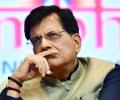
'The startup ecosystem, the government, and the owners of large pools of Indian capital need to actively support the creation of these local champions, not pull down the teams that are trying hard to get there.'

'You think: Did I fail the people I had to let go? Did I promise something I couldn't deliver? That day (when we had to sack 70 people) will stay with me.'

Various industry bodies have sought immediate government intervention through the imposition of anti-dumping duties, claiming India has seen a surge in imports of Chinese goods over the past two weeks.

While advancements in biotechnology hold immense promise for health and innovation, they also come with significant risks if misused.

'It will drive a lot of surrounding business, that is where we see some good projects coming in.'

'We don't have to compete with Maharashtra or Gujarat. We have to now start thinking about how we compete with the United States or China.'

The return filed could be treated as defective, invalid, or even be considered as not filed at all.
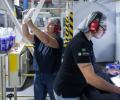
'Our business continues to roll out its strategy, the role of this GDTC continues to grow.'

The Final Reckoning, with all its startling ambition and scope, puts a dazzling display of stunt-work by Tom Cruise, applauds Mayur Sanap.

'Similar to the case of the digital payment system where the government created a public platform and others joined in, we are exploring a similar structure to create a PPP platform where the compute required for AI could be accessed by the small player.'

As temperatures shoot up this month signalling an early onset of summer, sales of air conditioners (AC) are set to increase, with companies expected to hike the prices of ACs by 4-5 per cent due to component shortages. Leading players like Haier and Bluestar and suppliers like EPack Durables have raised their production capacities to meet the 25-30 per cent rise in demand expected in the coming months.

Several multinational medical device makers are focusing on deepening their presence in India by expanding their local manufacturing footprint and research capabilities, a move that can catapult India into a strategic hub for the medical technology (medtech) industry. Among those increasing their reach in the country are Siemens Healthineers and Philips, signalling a broader shift from India being only a sales destination to becoming a global production and innovation base.

'You don't need massive industry or huge energy resources.' 'You could start with just 3 or 4 people in a coffee shop and invent the world.'
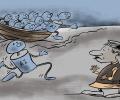
'We don't know which bus is coming next. I know for sure whatever bus comes next, it will miss that too.'
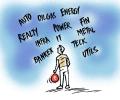
From the 30-share Sensex firms, Tata Motors, Bajaj Finance, Eternal, Adani Ports, Tata Steel, Titan, Mahindra & Mahindra and Power Grid were among the gainers. Asian Paints, Sun Pharma, ITC, Nestle, Reliance Industries and HCL Tech were among the laggards.

For Lori Beer, chief information officer, JPMorgan Chase & Co, largest banker in the US, India is a big part of the organisation's global technology footprint and is core to its products and services. This is evident from the fact that in less than two months since JPMorgan & Chase chief executive officer Jamie Dimon visited India, Beer has come here to see the recently opened centres in Mumbai and Bengaluru. "What is different for me this year are our new centres and to be able to come and see the vibrancy, and connectedness is great.
'In this age of competition, we will not survive long if we do not provide quality service to our consumers'

For India to transform into a high-income country with a projected gross domestic product (GDP) of $23-35 trillion, will need a sustained annual growth of 8 per cent to 10 per cent. This will be powered by India's demographic dividend, technological innovation, and sectoral transformation, according to the "India@2047: Transforming India Into A Tech-Driven Economy" report by Bain & Company and Nasscom. By 2047, the services sector is expected to contribute 60 per cent of India's GDP, while manufacturing will account for 32 per cent, both playing a pivotal role in economic expansion.

India's e-commerce market alone is projected to reach $200 billion by 2026, making it a prime industry for ambitious entrepreneurs, explains rediffGURU Harsh Bharwani.

Google is also working with the Election Commission of India to enable people to easily discover critical voting information on its search platform -- like, how to register and how to vote -- in both English and Hindi.

Wouldn't it be better to reach 45 with a backup engine of passive income that helps you glide through these years instead of grinding, asks Ramalingam Kalirajan

'If creative jobs can get disrupted, then left brain jobs like coding are easily disrupted. We are going through the journey of huge disruption.'

Generative artificial intelligence (AI), climate tech and fintech sectors will be the hot areas for venture capitalists and founders in the next year, according to the prediction by Prashanth Prakash, founding partner of the global venture capital firm Accel Partners in India and the chairperson of Karnataka Startup Vision Group. Prakash said that about $25 billion has been invested into building Gen AI globally. But a lot of that capital has not yet come to India, opening up huge opportunities for startups in the country.

Tech giant Microsoft has unveiled a blueprint for India on artificial intelligence (AI) governance, and proposed a regulatory architecture to oversee safety protocols, according to a whitepaper released on Thursday. The whitepaper titled "Governing AI: A Blueprint for India" comes amid Microsoft raising its stakes in its artificial intelligence tool ChatGPT. The proposed AI regulatory architecture includes regulations prescribing safety and security requirements, then license deployment for permitted uses in a licensed Al data centre with post-deployment safety and security monitoring and protection.

'That refresh programme -- because they are big aircraft and we cannot ground them all at the same time -- will last well into 2027.'

We have the workforce, now we need to ensure that we take full advantage of game-changing technologies and geopolitical openings, suggests Jayant Sinha, chairman, Parliament's Standing Committee on Finance.

'Before you work on your business plan, before you build your team, you should have a clear idea about what your product is, who your customer is, how valuable the product is, and whether the market is deep and wide.'

'GenAI has democratised the AI conversation. I do not know of a single client who is not interested in that conversation.'
The impact of AI automation in India is the lowest.
Generative AI (GenAI) has the potential to add a cumulative $1.2-1.5 trillion to India's GDP over the next seven years, according to a report by EY. The report titled 'AIdea of India: Generative AI's potential to accelerate India's digital transformation' says that in 2029-30 alone, GenAI can contribute an additional $359-438 billion to India's GDP. The report said that around 69 per cent of the overall impact of GenAI on India's GDP is expected to be derived from sectors such as business services (including IT, legal, consulting, rental of machinery and equipment, and others), financial services, education, retail, and healthcare.

Apple's ambitious strategy to expand iPhone exports, shift more production from China to India at a faster pace, and grow its domestic market hits a Trump-sized roadblock.

The USTR report, released just ahead of the US' April 2 deadline for implementing reciprocal tariffs, has also cited high tariffs and price caps, which have not increased in line with inflation, as key obstacles for US businesses.

'In 50 seconds, the pilots were fighting drag, trying relight, throttling up and avoiding obstacles.' 'They had neither height nor speed. There was no margin.'

The Slovak Republic's President, Peter Pellegrini, has expressed interest in adopting a tree-planting initiative similar to India's "Ek Ped Maa Ke Naam," launched by Prime Minister Narendra Modi. The inspiration came during a meeting with Indian President Droupadi Murmu, who was on a two-day state visit to Slovakia. During a tree-planting ceremony in Nitra, Murmu highlighted Modi's initiative to plant trees in the name of mothers. Pellegrini was impressed and suggested that Slovakia could consider a similar program. The initiative, launched on World Environment Day last year, encourages people to plant a tree in their mother's name as a symbolic gesture of love and respect.

'Could the impending new crisis, vibe coding, similarly create not a disaster like what befell Indian handlooms during the Industrial Revolution but another opportunity like what the Y2K crisis created?' asks Ajit Balakrishnan.
 © 2026 Rediff.com - Advertise with us - Disclaimer - Privacy Policy - Sitemap - Feedback - About us - Terms of use - Grievances